The Biggest Challenges as an Engineering Leader
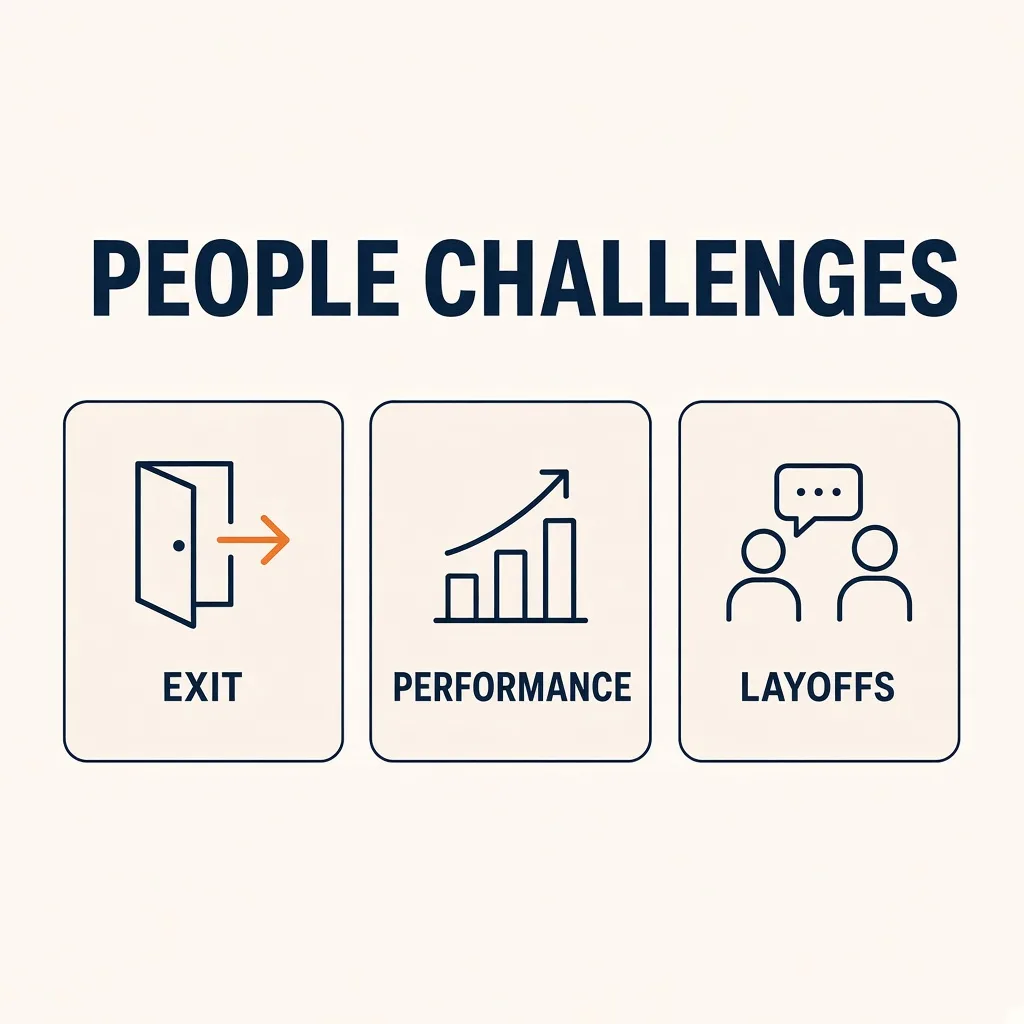
The hardest days I have had as an engineering leader were not caused by architecture or a production incident. They involved telling somebody something I wished were not true: a valued colleague was leaving, performance was not where it needed to be, or a good person’s role no longer existed.
These moments may occupy only a small part of the calendar, yet they stay with you much longer than an ordinary management task. They test whether the values you talk about still guide you when every available option feels painful.
When a great person leaves for a better opportunity
There is a rule I follow and recommend to all managers on my teams: people share good news, managers share bad news. When someone accepts a new role they are excited about, I want them to share it with the team themselves. It is their story and their win. I am genuinely happy for them - and at the same time, I am sad, because the team is losing a great person.
How to do this well:
- Celebrate the decision publicly. Congratulate them, invite them to share what they are excited about, and thank them for their impact.
- Make the transition clean. Agree on last day, knowledge transfer plan, and ownership handovers. Use a short checklist and track it.
- Keep the door open. Alumni networks matter. Great people may come back or send other great people your way.
- Reflect on retention. Ask what we could have done differently, but do not guilt-trip. Sometimes the best move for a person is outside.
Your job: model maturity, celebrate growth, and make the exit graceful. The team learns how to treat each other by watching how you behave in these moments.
When someone is not performing - or is toxic to the team
This is where truth with care matters most. The fastest way to lose trust is to avoid reality. The second fastest is to be harsh without support. Your path is the middle: clarity, empathy, and follow-up.
What it looks like in practice:
- Start with sincere feedback early. Use a structure like FUKO (Facts, Feelings, Consequences, Expectations) to reduce defensiveness and make expectations explicit. See 01. Giving Feedback - The Power of the FUKO Method.
- Separate performance from potential. Are expectations unclear, is the skill missing, or is the behavior misaligned with team values? Tailor your approach.
- Co-create a plan. Agree on concrete outcomes, a timeline, and support needed (mentoring, pairing, training). Document it. Review regularly.
- Hold the line. If performance or behavior does not improve, do not extend uncertainty forever. It is better - and often kinder - to help the person change environment and develop outside your team.
When the issue is toxicity (disrespect, blame, undermining), act faster. Toxicity multiplies. Reinforce team values, set clear boundaries, and follow through. The team will benefit - and the person will also benefit by finding a place that better fits them.
Principles to keep yourself aligned:
- Be human - acknowledge how hard this is, for them and for you.
- Be clear - write the expectations and read them together.
- Be consistent - follow up when you said you would, and close the loop.
The hardest challenge - layoffs and restructuring
Nothing is harder than saying goodbye to people who are great coworkers, high performing, and team oriented - not because of their performance, but because the company needs to reduce costs or change structure. As an engineering leader, this is the moment that hurts the most. You are asked to reduce the very capacity you work hard to build.
Two realities collide here:
- As a leader, you believe in building high performing, empowered teams. These people are your momentum.
- As a company, there are moments of cost pressure, strategy shifts, or legal reorganizations that remove positions regardless of individual performance.
That clash is emotional. You may feel grief, frustration, even guilt - because the person wants to stay, you want them to stay, and yet the position is gone. Hold two truths at once: honoring the person and executing the decision. Your team will look to you for how to do both with dignity.
There are also constraints that are not in your control. Depending on the company and the country, there can be strict legal and policy rules about who can speak, what can be shared, required timelines, severance structures, consultation periods, works councils or unions, and notification order. Respecting those rules is part of doing this responsibly.
It is also important to accept that this may happen at some point. In growing organizations, cycles of expansion and contraction occur. Sooner or later you may need to participate in a restructuring, even if you built the team with care. Knowing that it may happen does not make it easy, but it makes it less surprising.
And it can be emotionally hard for you. After such conversations, you might replay them in your head for days. The person wanted to stay. You wanted them to stay. You may feel the urge to avoid being alone with your thoughts because they keep returning. That is normal. There is no way to run from it entirely, but you can process it in healthy ways.
Be kind to yourself. Do something physical to help the body downshift: a long walk, gym, a run, a swim. Repetitive rumination amplifies emotion; it makes the feeling bigger. Instead, write down the constraints, the options you considered, and the rationale for the decision. If you can, debrief with a trusted peer or your manager. Time-box the reflection (for example, 30 minutes the next day), then move forward to the next concrete action your team needs.
After layoffs, your job is to rebuild trust and momentum. Start small: visible wins, clear priorities, and steady communication. See 10. Building Trust in Engineering Leadership for concrete habits.
Communication rules I live by
- People share good news - managers share bad news.
- Tell the truth with care.
- Share what you can - and name what you cannot.
- Follow up, always. Even “no update yet” beats silence, it shows you did not forget.
What the Team Will Remember
People may forget the exact words from a difficult meeting. They are less likely to forget whether you were direct, whether you treated the person with dignity, and whether you disappeared afterwards.
I cannot make these conversations painless. I can prepare properly, avoid false reassurance, and stay present after the decision. That is the standard I try to hold myself to when there is no comfortable version of the job.