How to Introduce Yourself as a New Engineering Manager: Examples
Your first introduction as an Engineering Manager should help the team understand who you are, what they can expect from you, and what happens next. A short, specific message is a better starting point than a list of leadership values without examples.
Example: Joining a New Team
Here is an illustrative opening to adapt, rather than a script to memorise:
Hi, I’m Alex, and I’m joining as your Engineering Manager. My background is in backend engineering. Outside work, I enjoy cycling and cooking.
Over the next two weeks, I want to understand what is working, where work gets stuck, and what you want from your manager. I’ll meet each of you individually and spend time with Product and the teams we depend on.
You can expect me to explain the reasoning behind decisions I can share, follow up on commitments, and ask before assuming I understand a problem. If you see a delivery risk, please bring it up early, even if you do not yet have a solution.
What would you like me to understand before I start suggesting changes?
Keep only the commitments you can honour. You do not need to promise that nothing will change or that you will always have an answer.
Example: Becoming the Manager of Former Peers
An internal promotion needs a different conversation. The team already knows your background; they may be wondering what happens to existing relationships.
You already know me as an engineer on this team. My role is changing, and I want to be explicit about that rather than pretend our working relationship will stay exactly the same.
I will now be responsible for things such as feedback and development conversations. I’ll explain how those work here and arrange individual conversations about what support you need.
I also want us to agree on which technical responsibilities I will keep and which need a new owner. Please challenge my ideas as before. If something feels harder to raise because of my new role, we should talk about it.
Adapt the responsibilities to your actual role. Do not announce a performance process you have not agreed with your own manager. Follow up individually: people may have questions they do not want to ask in front of colleagues.
Why introducing yourself as a new engineering manager matters
Your introduction is an initial agreement about how you will work together. It gives people something more concrete than “my door is always open”: when you will meet, how to raise a risk, and what you intend to learn.
The meeting does not establish trust by itself. It gives the team expectations against which to judge your subsequent behaviour. The practical work of building trust begins when you respond to the first difficult question or keep the first promise.
Personal Map: a tool for new leaders
I encountered Personal Maps during Management 3.0 training. The practice uses a mind map to help people learn about one another. I adapt it for a manager’s introduction by including how I intend to work with the team.
A map is optional. You can use the example messages without making a slide. If you find it easier to prepare visually, place your name in the centre and add a few branches you want to discuss.
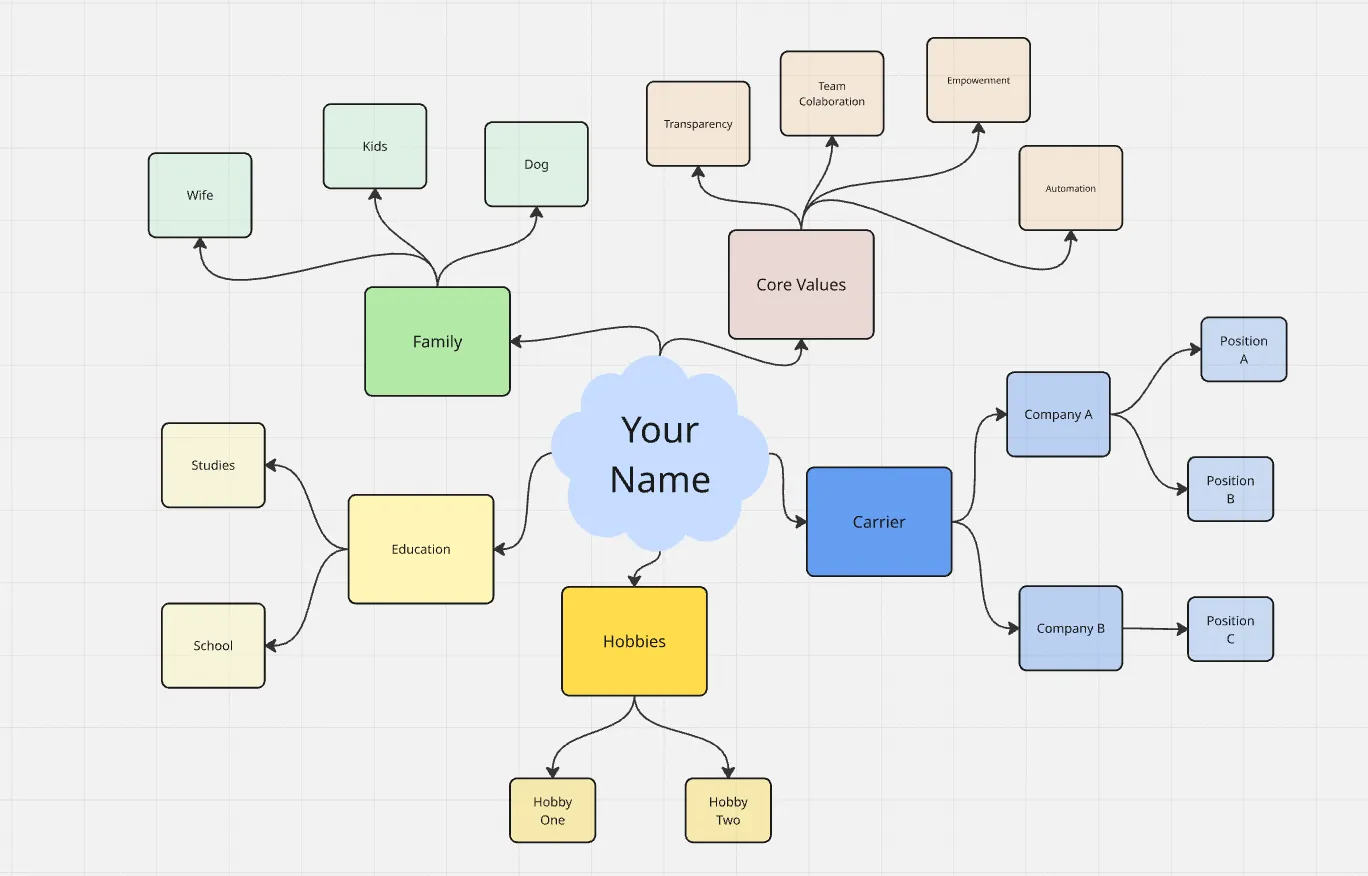
The personal map: two parts, one message
Part 1: Personal note
Choose two or three details you are comfortable sharing: your background, a hobby, or something that explains your interest in the work. You do not need to share family information or disclose anything private to appear approachable.
Use enough detail to start a conversation, then make room for the team. The meeting should not become a long account of your career.
Part 2: Your leadership values as an engineering manager
Choose a few principles and describe the behaviour behind each one. For example:
- Transparency: “When I can share a decision, I’ll explain the reasoning and what is still uncertain. If something is confidential, I’ll say so.”
- Ownership: “When we delegate work, we’ll agree on which decisions the owner can make without me.”
- Sustainable pace: “When a new request arrives, we’ll discuss what it displaces instead of silently adding it to the plan.”
These statements are more useful than promising to be transparent, empowering, or supportive in every situation. They let people recognise the value in ordinary work.
Two parts, one message
Connect the introduction to the next conversation: “That’s how I intend to work. In our first 1:1, I’d like to understand what has helped or frustrated you with previous ways of working.”
How to build your personal map in 15 minutes
- Spend five minutes choosing personal details and the responsibilities you need to explain.
- Spend five minutes turning two or three values into observable commitments.
- Spend five minutes checking the map: is anything too private, vague, or unrealistic?
Present the result briefly and leave time for questions. Share the map afterwards if it is useful; there is no need to record a personal conversation just to preserve the slide.
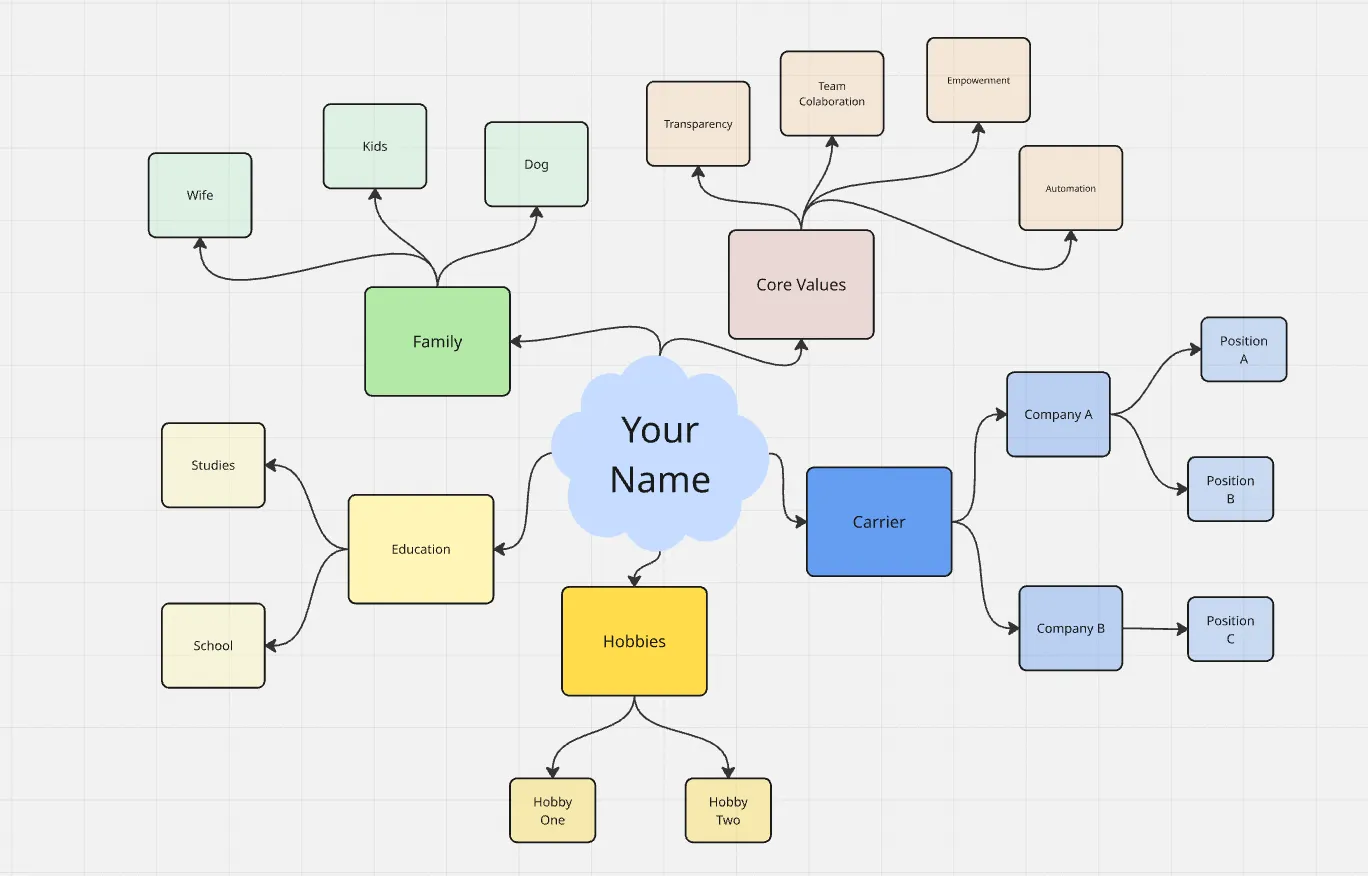
Personal map example for new leaders
This existing Miro example shows how background, personal interests, and leadership values can fit together. Use the structure while selecting details appropriate to your own introduction.
Common mistakes when introducing yourself to a team
Avoid turning the introduction into a promise of an immediate transformation. You have not yet heard enough to know what should change.
Avoid presenting aspirations as established habits. If you are still learning to delegate, you can say that and explain how you want to work on it. Claiming you never micromanage gives the team a promise that may be difficult to trust.
Finally, do not use the group introduction to resolve individual concerns. Offer 1:1 time and respect what people prefer to discuss privately.
Tie-ins to your first 90 days as a manager
Your introduction starts the listening phase. The next steps are to meet people, clarify your own manager’s expectations, and understand the team’s responsibilities and dependencies. Use the first 90 days plan to decide what to do after the first meeting.
Make the Map Earn Trust
A personal map creates an expectation, not proof. If I put “transparency” on the slide and later hide the reasoning behind decisions I could explain, the introduction works against me. If I say feedback matters but become defensive when I receive it, the team notices.
Prepare a short introduction, leave room for questions, and make one commitment you can follow through on this week. That follow-through gives the words their meaning.