What Is Engineering Leadership? Product, Process, and People
Engineering leadership connects technical work with customer needs, a workable delivery process, and the people doing the work. The exact responsibilities differ between an Engineering Manager, Tech Lead, and other leadership roles.
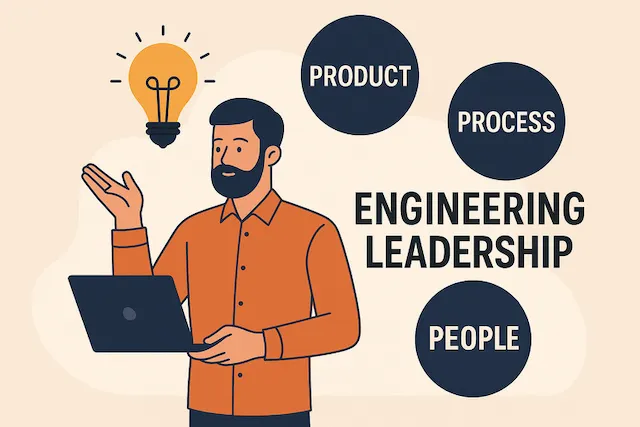
Ask three people what an Engineering Manager does and you may hear: deliver the roadmap, run the team, or keep the technology healthy. I use three headings to keep those responsibilities connected: Product, Process, and People. This is my working lens, not a universal job description.
If you need help with a situation now, start here:
- New to management: What changes in your working week, followed by your first 90 days.
- Every decision comes back to you: Delegate a clear result, then agree on decision authority.
- A difficult conversation is waiting: Prepare specific feedback with FUKO and listen to the other person’s perspective.
Product: Connect Engineering to the Problem
Understand who the team serves, what outcome matters, and why a request deserves attention. Work with Product to discuss options and trade-offs rather than treating the roadmap as a list engineering can only accept or reject.
For example, a customer request may be addressed by a smaller change than the proposed rebuild. Your contribution is to explain the technical options, risks, and cost of delay so that the decision is informed.
Process: Make Delivery Work
Notice where work waits, where ownership is unclear, and what repeatedly causes rework. A useful process helps people coordinate and learn; it does not need to add a ceremony every time something goes wrong.
If releases wait for approval, investigate the handoff. The fix might be clearer release responsibilities, access to a reviewer, or better evidence of readiness. “We need more meetings” is a hypothesis, not a diagnosis.
People: Support Performance and Development
For a people manager, this includes clear expectations, feedback, development conversations, and attention to workload. Hiring and staffing responsibilities depend on the role and organisation.
Consider an engineer whose work keeps slipping. Before deciding that motivation is the problem, ask whether the outcome was clear, the dependencies were available, and the workload was realistic. Then discuss the behaviour or support that needs to change.
Why the 3Ps Must Be Balanced
A release can expose all three dimensions. Product needs a customer commitment met, the delivery process has a review queue, and one senior engineer is carrying too much of that queue.
Optimising only the date may hide the overload. Coaching the engineer alone may leave the queue unchanged. Replacing the process without understanding the customer commitment may solve the wrong problem. Use the three perspectives to decide where an intervention is likely to help.
A Simple Check for Your Week
Look at the last two weeks of work and identify which dimension has received little attention. The aim is not a one-third split of your calendar. It is to notice a neglected responsibility and choose one action.
If you are taking over a team, the 30-60-90 day plan gives that review a practical sequence.